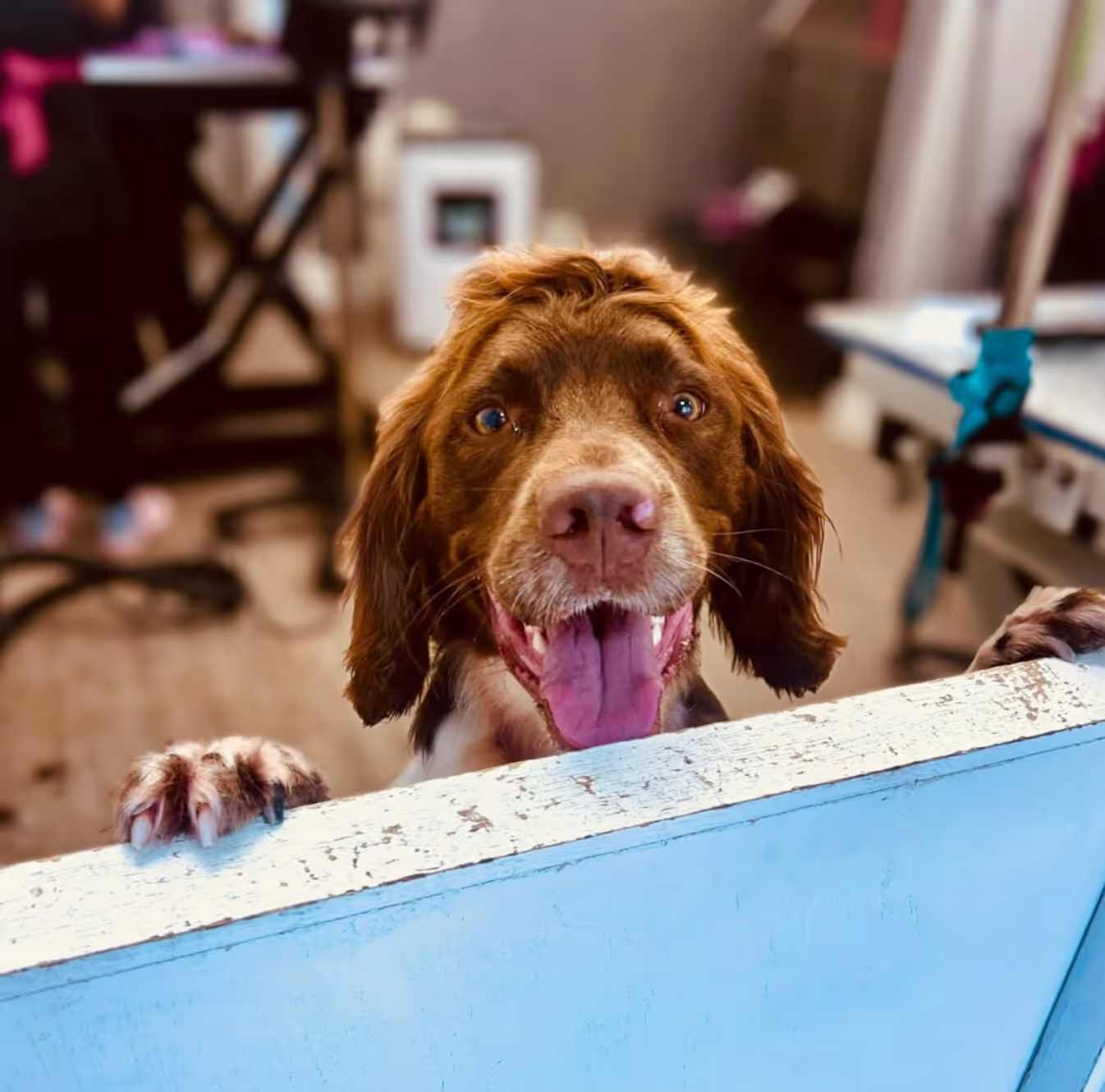
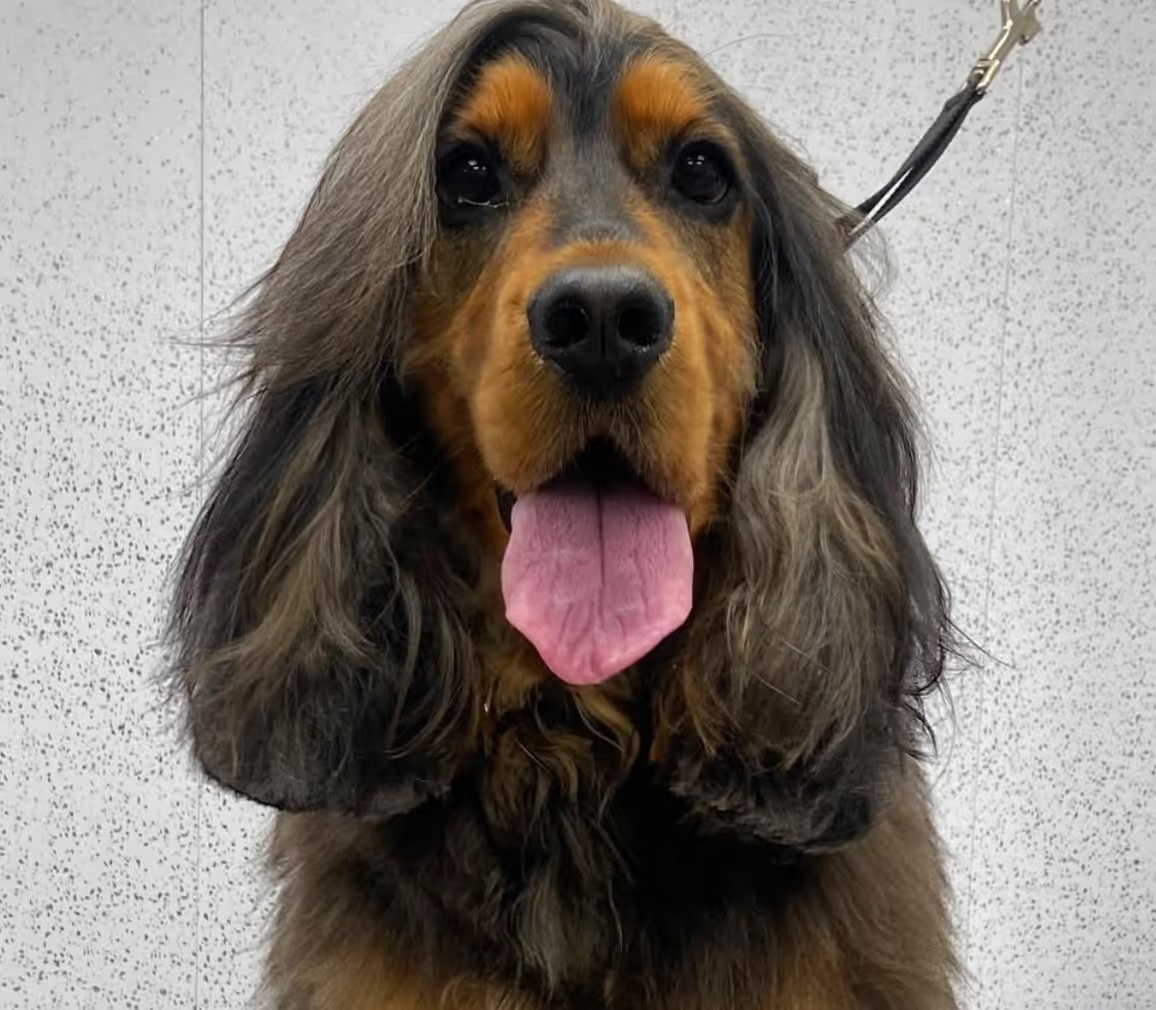
If you walk through any park in Sunbury on a Saturday morning, you will not get far before you meet a Cockapoo. They are friendly, clever, and they have that gorgeous soft coat that makes everyone want to stop and say hello. What most new owners do not realise, until they are sitting in front of us with a worried look on their face, is that the very thing people love about the breed is also the thing that needs the most looking after.
A Cockapoo coat is a mix of the Poodle and the Cocker Spaniel, and it almost never sheds the way other dogs do. That sounds like a dream, and in many ways it is, but it comes with a catch. Hair that does not fall out has to go somewhere, and if it is not brushed out, it tangles, knots, and eventually mats right down to the skin. Coat health, not just the haircut, is what we care about most, and with a Cockapoo that philosophy really earns its keep.
As a general rule, a Cockapoo should visit a professional groomer every four to six weeks. Some owners try to stretch it to eight, and while a few coats can cope, most cannot. By eight weeks the coat is usually long enough that the daily handling at home has not kept pace, and we start finding the early stages of matting behind the ears, under the legs, and around the harness line.
The right interval depends a lot on the individual coat. A tighter, curlier Cockapoo tends to trap more loose hair and needs more frequent attention. A looser, wavier coat is a little more forgiving. Puppies are a special case, and the sooner they start the better, but more on that shortly. The honest answer is that four to six weeks suits the majority of Cockapoos we see in Sunbury, and we are always happy to recommend a personal schedule once we have met your dog and felt the coat for ourselves.
This is the part that makes the biggest difference, and it is the part most often skipped. A professional groom every few weeks keeps the coat in good shape, but it cannot undo a month of no brushing at home. The coat grows every single day, and so the care has to happen every few days too.
We recommend brushing your Cockapoo properly three or four times a week, and ideally every day if the coat is on the curlier side. By properly, we mean working right down to the skin rather than skimming over the top. A lot of owners brush the surface, the dog looks tidy, and everyone is happy until a wet walk turns the hidden underlayer into a felt-like mat. The coat needs to be parted in sections and brushed from the skin outwards.
The two tools worth owning are a good slicker brush and a stainless steel comb. The slicker lifts and separates the coat, and the comb is your test. If the comb glides from root to tip without snagging, the section is done. If it catches, there is a tangle hiding underneath that the slicker has missed. Start at the feet and legs, which are easy to forget, then work up the body, and pay particular attention to the friction points: behind the ears, the armpits, the chest where a harness sits, and the trousers at the back end.
It is tempting to think of mats as untidy but harmless. They are not. A mat is a knot of hair that tightens over time, and as it tightens it pulls on the skin. Imagine a small section of your own hair being twisted and tugged constantly, day and night, and you start to understand why a heavily matted dog is genuinely uncomfortable.
Mats also trap moisture and dirt against the skin, which can lead to soreness, irritation, and infection. They cut off airflow, and the skin underneath often becomes red and tender. Crucially, you must never bathe a matted dog, because water makes mats tighten and shrink, locking them in even harder. Many owners unknowingly make the problem worse by giving a knotty coat a bath at home with the best of intentions.
When a coat is severely matted, the kindest and only safe option is often to clip it short and start again. We always approach this gently and without judgement, because life gets busy and coats get away from all of us sometimes. But it is far better for the dog to avoid reaching that point, which is exactly why the little-and-often routine matters so much.
One of the nicest things about a Cockapoo is how versatile the coat is. The classic teddy bear trim, with a rounded face and an even length all over, is the look most owners picture, and it is beautiful when it is kept up. It does, however, need consistent brushing to stay that way.
If your weeks are full and brushing keeps slipping, there is no shame in choosing a shorter, more practical trim. A shorter coat is easier to maintain, more comfortable for the dog, and still looks smart. We would always rather give a happy dog a sensible shorter cut than watch a longer style slide into matting. The right style is the one that fits honestly into your routine, and that is a conversation we are glad to have at every appointment.
Our British weather has a real say in Cockapoo coats. Wet, muddy winter walks along the river and through the local parks mean damp fur and more frequent tangling, so the colder months often call for a little extra brushing. In spring and autumn, you may notice more loose hair working its way into the coat as the dog adjusts.
A common trap is letting the coat grow long for winter to keep the dog warm, then not increasing the brushing to match. A longer coat in wet weather is a matting machine if it is not maintained. If you do prefer a longer winter look, simply commit to more frequent brushing and book your salon visits a touch closer together.
Sometimes you should not wait for the next scheduled appointment. If you find a mat you cannot gently comb out, if your dog has had a particularly muddy adventure, or if you notice them scratching, nibbling, or rubbing at a particular spot, it is worth getting them seen. Catching a problem early almost always means a quicker, gentler, and cheaper fix than leaving it to grow.
A Cockapoo is not a wash-and-go breed, and anyone who tells you otherwise has not lived with one through a Sunbury winter. The reward for a little regular effort is enormous: a soft, healthy, comfortable coat and a dog who actively enjoys being handled because grooming has always been a calm, positive part of their life.
Book in every four to six weeks, brush properly several times a week at home, invest in a slicker and a comb, and never bathe a coat with knots still in it. Do those few things and your Cockapoo will look and feel wonderful all year round. If you would like a personal grooming schedule for your dog, or you are not sure whether what you are feeling in the coat is a tangle or a mat, bring them in and we will happily take a look and show you exactly what to do at home.
There is one stage that catches almost every Cockapoo owner off guard, and it is worth flagging clearly. Somewhere between around six and twelve months of age, a Cockapoo goes through its coat change, when the soft puppy fluff is replaced by the denser adult coat. During these few months the coat can seem to mat almost overnight, sometimes faster than you can keep up with, even if you have been doing everything right. This is completely normal, but it does mean the coat change period demands more brushing, not less, and often slightly more frequent salon visits to get through it. Owners who understand this in advance sail through it; those who do not are often the ones who end up needing a much shorter trim than they wanted. If your young Cockapoo's coat suddenly seems to be fighting you, the coat change is almost certainly why, and it does settle once the adult coat is fully through.
How much does it cost to groom a Cockapoo? Prices vary depending on the size of the dog, the length and condition of the coat, and the style you choose. A well-maintained coat groomed on a regular schedule is quicker and therefore more economical than one that has been left to grow and tangle, because heavy de-matting takes far more time and is harder on the dog. The most cost-effective approach over a year is to book regularly rather than waiting until the coat is in trouble. We are always happy to give you a clear quote once we have met your dog and seen the coat.
Can I just keep my Cockapoo's coat shaved short to avoid brushing? You can keep a Cockapoo in a shorter, more practical trim, and for busy households it is often a sensible choice. Even a short coat still grows and still needs regular professional trimming and some brushing, so it reduces maintenance rather than removing it altogether. What matters most is being honest with yourself about how much brushing you will realistically do, and choosing a length that matches that. A comfortable, well-kept short coat is always better than a long style that ends up matted.
Why does my Cockapoo hate being brushed? Usually it is because brushing has, at some point, been uncomfortable, often from tugging at tangles that had already formed. The fix is to keep on top of the coat so there is nothing painful to pull at, to use the right tools, and to keep sessions short and positive with plenty of praise. Starting young helps enormously. If your dog already dislikes it, build back up slowly with very brief, reward-filled sessions, and we can show you the technique in person.
Is a Cockapoo really hypoallergenic? No dog is truly hypoallergenic, but because Cockapoos shed very little, they release less hair and dander into the home, which some allergy sufferers tolerate better. The trade-off is exactly the high-maintenance coat this article describes: the hair that does not shed stays in the coat and must be brushed and trimmed out instead.